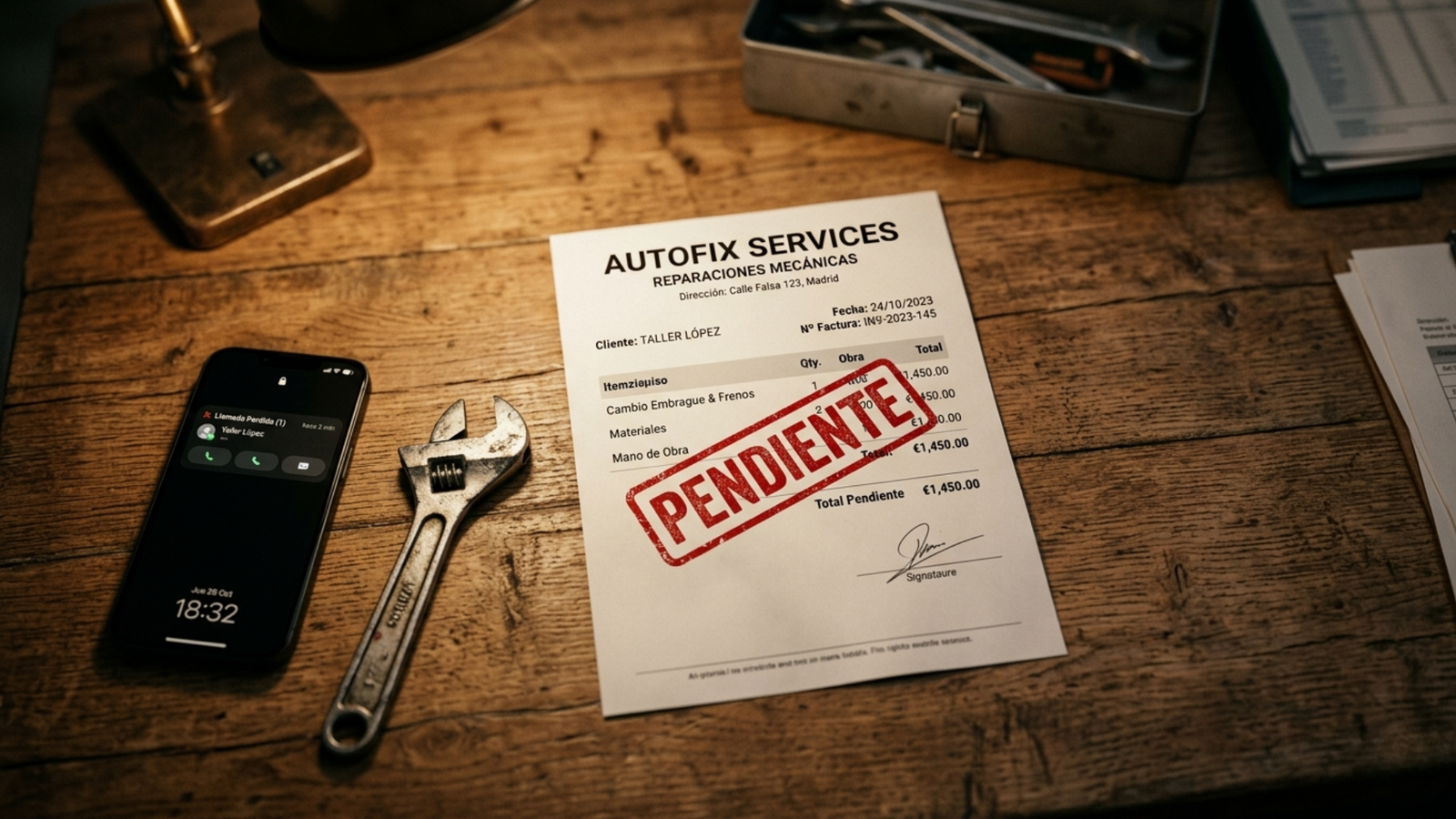
A completed job and a customer who does not pay. It has happened to everyone in this trade. The key is to act methodically, not angrily.
According to industry data, technical service companies in Spain experience average late payment rates of 5-8% of turnover. For a company with annual turnover of €200,000, that means €10,000-16,000 that is either lost or collected months late. Money you need for wages, materials and your own bills.
Step 1: Prevention is better than cure
80% of non-payments can be prevented with these practices:
- Get a signed quote before starting. Always. Even for a small job. A signed quote is a contract. Without one, you are unprotected.
- Ask for a deposit. For jobs of a certain size, ask for 30-50% up front. It is standard practice and a serious customer will not have a problem with it. Refusal is a warning sign.
- Invoice when you finish, not ‘I'll send it later’. The longer you take to invoice, the longer they take to pay. Issue the invoice on the same day you finish the job. Ideally, do it there and then from your mobile.
- Set clear payment terms. ‘Payment within 30 days’ is standard. Put it in writing in the quote.
Step 2: The customer has not paid. What now?
Before getting angry, bear in mind that many missed payments are oversights rather than bad faith. The recommended sequence is:
- Day 7 after the due date: Send a friendly message by WhatsApp or email. ‘Hello, I'm sending invoice no. X in case it has been overlooked. Can you confirm that everything is in order?’
- Day 15: Make a phone call. Direct but polite. ‘Hi, the invoice from two weeks ago is still outstanding. Is there a problem?’
- Day 30: Send formal written communication (email or letter). ‘I am writing to let you know that invoice no. X has been overdue for 30 days. I hope we can resolve this amicably.’
- Day 45: Send a burofax or registered letter demanding payment. This is now serious. Include the invoice, the signed quote and a deadline of 10 days for payment.
- From day 60 onwards: Take legal action. For invoices of up to €6,000, you can use the Order for Payment Procedure, which is quick and does not require a lawyer. You only need the invoice and proof that the service was provided.
Is it worth going to court?
For large invoices, yes. For small invoices, do the maths. The Order for Payment Procedure does not involve lawyers' fees, but does require a court representative if the debt exceeds €2,000. Sometimes the threat of a burofax is enough — 60% of late payers pay when they receive one.
What you must NOT do:
- Name and shame the debtor on social media. It is tempting, but it may constitute an offence against their honour. Do not do it.
- Make threats. Not even as a joke. You will only create legal problems for yourself.
- Stop pursuing payment ‘because it isn't worth it anyway’. If you normalise non-payment, it will happen again. Always pursue payment, however small the amount.
- Refuse further work for good customers because of a one-off delay. Distinguish between habitual late payers and people who have simply forgotten. Everyone has a bad month.
Key tool: the non-payment register
Keep a record of who owes you, how much, since when, and what action you have taken. Do not rely on your memory. A simple Excel spreadsheet or your management system is enough.