Occupational risk prevention is not just a legal requirement. It is what prevents an accident from ruining your business — and someone’s life.
I know it sounds like bureaucracy. And some of it is. But after a serious workplace accident, the consequences are not only human: fines of €2,000 to €800,000, a possible surcharge on benefits, and criminal liability for the employer if the required measures were not in place.
The minimum you need
If you have employees (or even if you are self-employed with staff under your responsibility), you need:
- Prevention Plan. The core document identifying the risks in your activity and how to prevent them. It is prepared by an External Prevention Service (SPA). Cost: €200-600/year depending on size.
- Risk assessment. Specific to each role. An electrician's risks are not the same as a plumber's. The SPA carries this out as part of its service.
- Employee training and information. Mandatory when hiring, when someone changes roles, and when new equipment or procedures are introduced. It must be documented and signed.
- Medical examination. Annual and free for the employee. Specific to your sector (for example, for electricians it includes cardiovascular and eyesight tests).
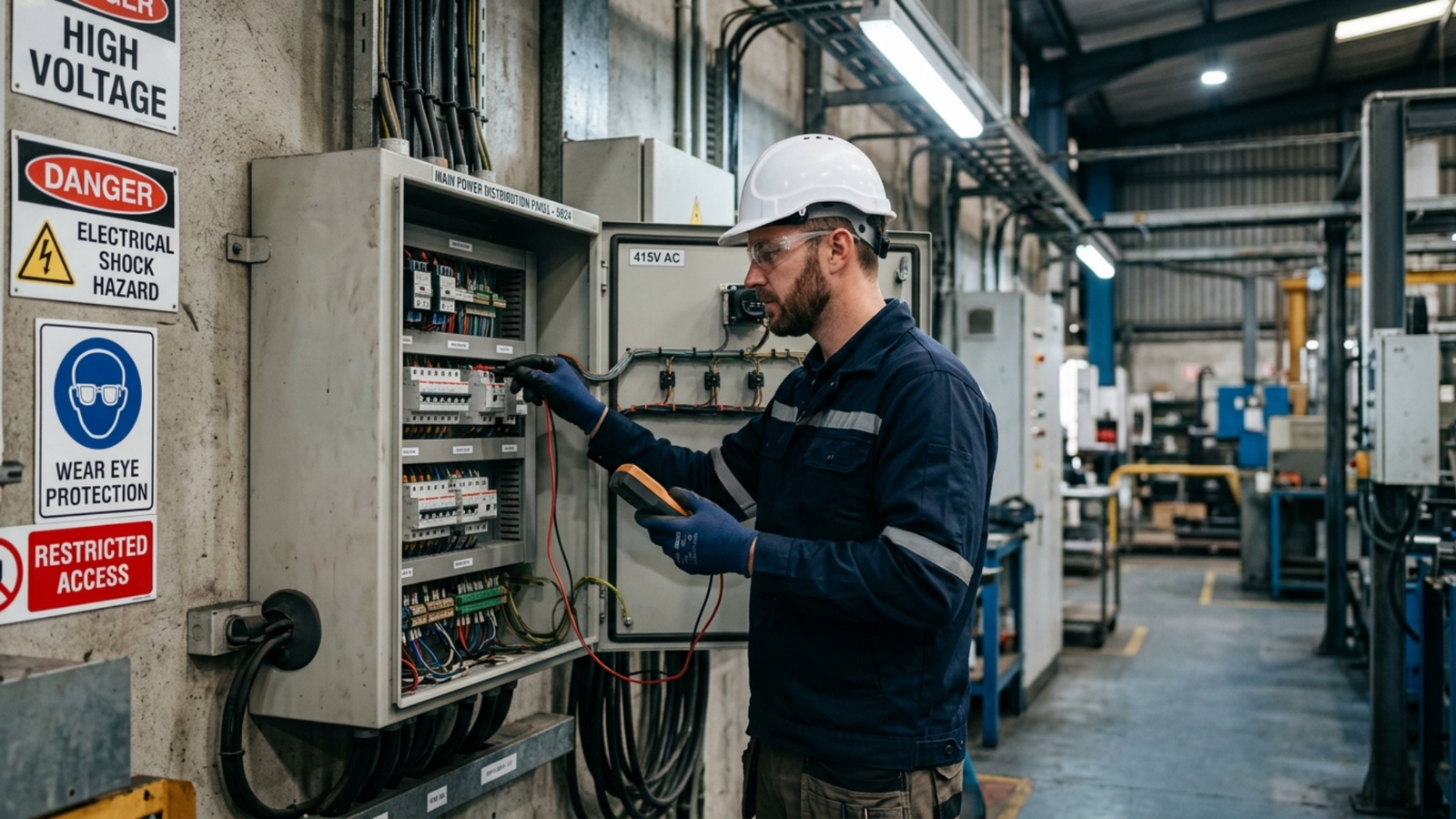
- Provision of PPE. Personal Protective Equipment appropriate to the risk: hard hat, insulating gloves, safety glasses, safety boots, and a harness if working at height. Document its provision with the employee's signature.
- Coordination of Business Activities (CAE). If you work on construction sites or at other organisations' facilities, you must coordinate with the party responsible for the workplace. Essentially, this means exchanging documentation on risks and measures.
The most common risks by trade
- Electricians: Direct and indirect electrical contact, falls from height, arc-flash burns and overexertion.
- Plumbers: Overexertion, awkward postures, cuts, exposure to substances (soldering) and falls.
- Heating and air-conditioning: Working at height (outdoor units), handling refrigerant gases and electrical risks.
- Carpenters: Cuts from machinery, flying particles, noise and wood dust.
- Builders: Falls from height, blows, entrapment, overexertion and dust.
Five low-cost measures that prevent major problems
- A 5-minute safety briefing at the start of the day. Especially if the day's work involves particular risks. It does not need to be formal — simply review the key points.
- Check tools before using them. Frayed cables, loose handles, equipment that has not been inspected. 30% of accidents involving tools can be prevented by a 10-second visual inspection.
- Mark out the work area. Cones, tape and signs. This protects the technician and third parties.
- Hydration and breaks. Especially in summer. Heatstroke while working on a roof is a real and preventable risk.
- An up-to-date first-aid kit in the van. This is mandatory, and it must be complete — not the one from 5 years ago with expired plasters.
Can I act as my own prevention service?
Yes, if you have fewer than 10 employees and your activity is not listed in Annex I of Royal Decree 39/1997 (particularly hazardous activities). You need to complete a 30-50-hour occupational risk prevention course. But honestly, for most small businesses, hiring an SPA is more practical and relatively inexpensive.